
Shou Sugi Ban: Everything You Need to Know About This Ancient Timber Finish
What is shou sugi ban?
Walk through enough contemporary architecture shows or scroll through enough design publications, and you'll inevitably encounter the dramatic facade of a building clad in deep, textured black timber. The finish is called shou sugi ban, a traditional Japanese timber preservation technique that's captured the imagination of architects, designers, and homeowners around the world.
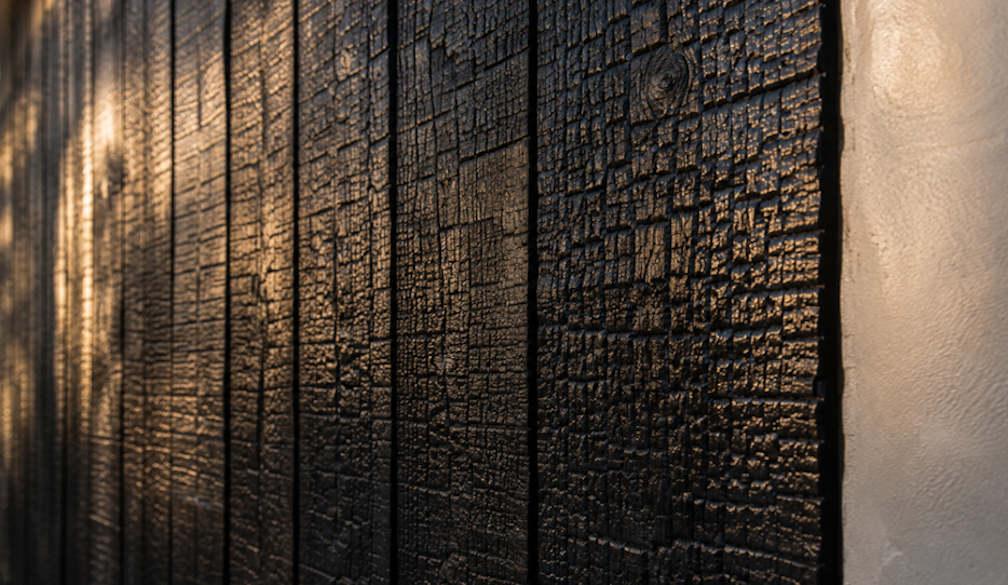
The name comes from the Japanese words for 'burnt cedar board', and the technique is exactly what it sounds like: timber is charred using fire to create a carbonised surface layer that protects the wood beneath from moisture, insects, UV radiation, and even fire. The result is a cladding material that's as visually striking as it is genuinely durable, a rare combination in the building industry.
In Japan, shou sugi ban has been used for centuries on traditional buildings, farmhouses, and shrines across the country. Its revival in contemporary Western architecture has given the technique a new context and a fresh aesthetic vocabulary, one that sits comfortably alongside concrete, glass, and raw steel in the design language of modern building.
The history and cultural context of yakisugi
To understand shou sugi ban properly, it helps to understand its origins. The technique, also known as yakisugi in Japanese, emerged in the Edo period (1603–1868) as a practical solution to Japan's humid, insect-rich climate. Japanese cedar, or sugi, was the predominant construction timber of the period, and builders discovered that charring the exterior boards provided a dramatic improvement in longevity.
The traditional method involves binding three sugi boards into a triangular tube, lighting them at the base, and allowing the chimney effect to draw the flame upward, charring the interior faces evenly. Once the desired level of carbonisation is reached, the boards are separated, cooled with water, brushed to remove loose carbon, and finished with natural tung oil.
Japanese coastal villages used yakisugi extensively on fishermen's houses and warehouses in environments where salt air, moisture, and the risk of fire from fishing equipment made robust timber preservation essential. The fact that these buildings often survive with their original cladding intact after a century or more speaks to the technique's genuine effectiveness.
The Western revival of the technique began in earnest in the early 2000s, driven largely by architects in Europe and North America who encountered Japanese vernacular architecture and recognised the potential of applying yakisugi's principles to contemporary building design. Australian architects and designers followed, and the technique has now found a strong foothold in local residential and commercial architecture.
How is Shou Sugi Ban made?
The production process for shou sugi ban timber cladding has evolved considerably from its traditional origins, though the fundamental principle of controlled charring to create a carbonised surface remains unchanged.
Contemporary production typically uses one of several methods:
- Gas torch charring — a controlled gas flame is passed over the timber surface at a consistent speed and distance to produce an even char depth
- Kiln or oven charring — timber is placed in a controlled environment where temperature and duration are precisely managed
- Traditional open flame — the original three-board chimney method, still used by some craftspeople for small-scale or bespoke production
The level of char, which is the depth of carbonisation, is the key variable that affects both the aesthetics and the performance of the finished product. Suppliers typically offer a range of char levels:
- Brushed or light char — the timber surface is lightly charred and then brushed to reveal the grain beneath; the colour is a warm charcoal rather than deep black
- Medium char — deeper carbonisation with a more textured surface; grain is partially obscured by the carbon layer
- Heavy or deep char — the classic 'alligator skin' finish; the surface is deeply textured and black, with maximum carbon depth
After charring, the timber is typically finished with a penetrating oil, such as tung oil, linseed oil, or a proprietary oil formulated for charred surfaces to seal and stabilise the carbon layer and replenish the timber's moisture balance beneath the char.
Why it performs so well: the science of carbonisation
Understanding why shou sugi ban works requires a brief look at what carbonisation actually does to timber.
Wood is made up of cellulose, hemicellulose, and lignin. Insects, bacteria, and fungi, the primary agents of timber decay, feed on these organic components. When the outer layer of the timber is converted to carbon through burning, the biological material that those organisms require is simply no longer present. Carbon doesn't rot, doesn't attract insects, and provides no nutritional substrate for the microorganisms that cause fungal decay.
Carbon is also highly hydrophobic; it actively repels water rather than absorbing it. This means that a well-charred and oiled timber surface sheds rainfall efficiently rather than allowing it to penetrate and create the moist conditions that support decay. In environments with significant rainfall, this hydrophobic quality makes a genuine difference to the timber's long-term performance.
UV resistance is another significant advantage. The pigments in conventional timber stains and paints degrade over time under Australia's intense solar radiation, leading to fading, chalking, and the need for regular recoating. A carbonised surface doesn't fade in the same way; the black colour is inherent to the material, not a surface coating, and it remains stable even under prolonged UV exposure.
Shou sugi ban in Australian architecture
Australia's climate presents an excellent case for shou sugi ban. The combination of intense UV, variable rainfall, termite risk, and, in many regions, bushfire threat creates a challenging environment for exterior cladding materials. Shou sugi ban addresses all of these challenges effectively.
Residential applications
On Australian homes, shou sugi ban is most commonly used as exterior wall cladding either across an entire facade or as a contrast element alongside rendered walls, brick, or metal cladding. The deep black finish works particularly well against the bleached sandstone colours of coastal landscapes, the red earth of inland regions, and the green canopy of bushland settings.
Interior applications are also growing in popularity. A single feature wall in a living area or bedroom clad in a lightly brushed shou sugi ban timber creates a striking focal point that's warm, textural, and completely unlike anything achievable with paint or wallpaper. The interior environment doesn't demand the same performance requirements as exterior cladding, which means lighter char levels that retain more timber grain can be used to great effect.
Commercial and hospitality applications
In Australia's hospitality and retail sectors, shou sugi ban has become a go-to material for venues looking to create an immediate and memorable design statement. Restaurants, bars, boutique hotels, and retail stores have all embraced the finish for its dramatic visual impact and the sense of craftsmanship it conveys.
The durability of the material is also a practical advantage in commercial environments. Unlike a painted or lacquered timber surface, a charred surface can sustain minor surface contact without the damage being obvious. Small marks or abrasions on a deep char finish are far less visible than on a bright painted surface.
Selecting the right timber species for shou sugi ban
The traditional substrate for yakisugi is Japanese cedar (sugi), but many other species respond well to charring and are used in contemporary production. The choice of species affects the char's texture, the colour profile, and the long-term performance of the finished product.
Species commonly used for shou sugi ban cladding include:
- Western red cedar — light, even char, beautiful surface texture, lightweight and easy to work
- Accoya (acetylated pine) — exceptionally stable, takes char evenly, excellent moisture resistance
- Victorian ash — strong grain pattern, responds well to medium and heavy char
- Douglas fir — open grain produces dramatic texture under heavy char, popular for commercial applications
Species with open, pronounced grain structures tend to produce more dramatic charring results, as the harder latewood resists carbonisation more than the softer earlywood, creating a raised, textured surface. Species with tighter or more uniform grain produce a smoother, more even char finish.
Installation and detailing considerations
Installing shou sugi ban cladding is broadly similar to installing other timber cladding products, but there are a few specific considerations that affect the final result.
Handling care is important. The charred surface, particularly on deeply charred boards, can transfer carbon onto hands, clothing, and adjacent surfaces during installation. Some installers wear gloves and take care with board movement to minimise this. Once oiled and installed, the surface stabilises considerably and day-to-day contact doesn't present an issue.
Fastener selection follows the same principles as other timber cladding: stainless steel screws (Grade 316 in coastal environments) are the appropriate choice. Galvanised fasteners can corrode against the tannins in timber and the carbon surface, leading to unsightly staining.
End sealing is particularly important with charred timber. Cut ends expose the uncharred timber beneath and should be either re-charred on site with a hand torch and touched up with oil, or sealed with a quality end-grain sealer to prevent moisture ingress at vulnerable points.
Ventilation is also critical. Like all timber cladding, shou sugi ban performs best when installed over a ventilated cavity that allows air movement behind the boards. This prevents moisture from accumulating on the back face of the boards and ensures the sub-structure stays dry.
Maintenance: simpler than most people expect
One of the most common questions about shou sugi ban is how difficult it is to maintain. The answer, for most Australian applications, is: considerably simpler than painted or oiled untreated timber.
The charred surface doesn't require painting. It doesn't peel, blister, or chalk. The primary maintenance task is periodic re-oiling of the surface, which replenishes the moisture-resistance layer and keeps the carbon stable. Depending on your climate and the level of exposure, this is typically required every three to seven years.
For most Australian homeowners, the maintenance regime is simple: a wash-down with a diluted timber cleaner every year or two to remove surface dust, lichen, and organic buildup, followed by a re-oil application when the surface starts to look dry or when water stops beading effectively on the surface. That's genuinely it.
The longevity claims for well-maintained shou sugi ban are not marketing hyperbole. Original yakisugi buildings in Japan are approaching 100 years of age with their timber facades still structurally intact. In the Australian context, with the right species, correct installation, and appropriate periodic maintenance, a lifespan well in excess of 30 to 40 years is entirely realistic.
Conclusion
Shou sugi ban is one of those rare products that earns its popularity. It's not a trend that succeeded because of clever marketing; it succeeded because it genuinely works. The combination of exceptional durability, low maintenance requirements, strong performance in challenging climates, and a visual character that's simply impossible to replicate with any synthetic material has made it one of the most significant exterior cladding options in contemporary Australian architecture.
Whether you're an architect specifying materials for a coastal residence, a designer developing a commercial interior, or a homeowner looking for a facade treatment that will define your home for decades, shou sugi ban deserves serious consideration. The ancient Japanese builders who developed it knew what they were doing, and the best contemporary applications are proof that some techniques simply don't need improving.

 Metropolitan Digital