
A Thinning Gratitude
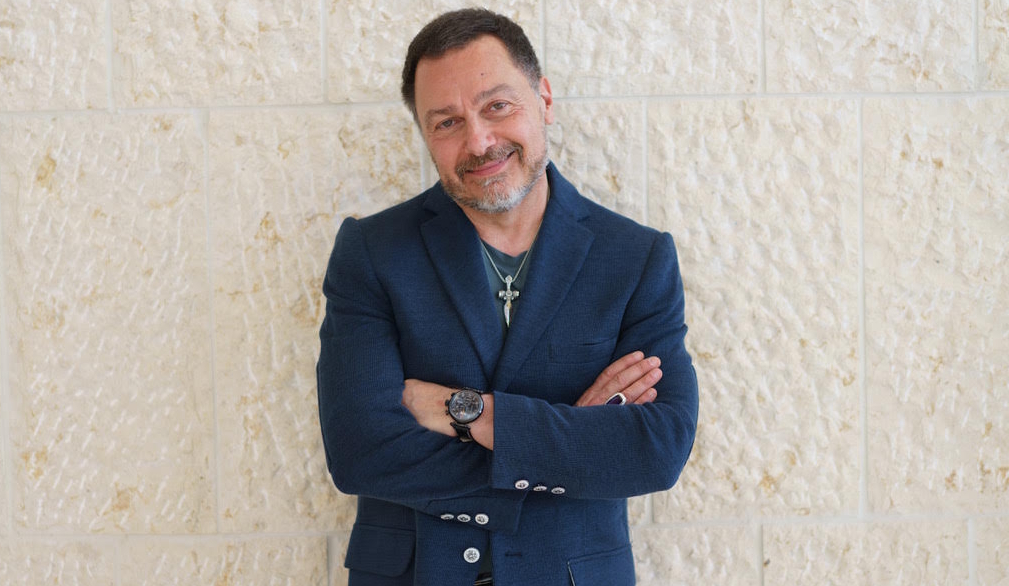
- Written by Mark J. Chironna, PhD.

On a recent episode of CNN NewsNight, a small drama played out that says more about the state of public life than the segment itself. Dylan Douglas, the twenty-five year old son of Michael Douglas and Catherine Zeta-Jones, joined Abby Phillip’s panel to discuss politics. Across from him sat conservative commentator Scott Jennings. The exchange was sharp but not unusual for cable news.
What followed was more revealing. In the days after, Jennings went on Meghan McCain’s podcast and bragged about how he had “dismantled” the couple’s “nepo-baby” son and joked that he was happy to apologize to Zeta-Jones “over a nice seafood dinner.”i Coverage framed the moment as a victory: the seasoned pundit schooling the privileged novice. The metric was not insight, but domination. The real story was the pleasure taken in public embarrassment. Even the language used to describe him tells us something.
The slur “nepo baby” does not invite honest questions about privilege. It collapses a human being into a surname and treats his visibility as self-evident corruption. Whatever one thinks of celebrity culture, the children of actors, musicians, or politicians still have to do the same inner work as everyone else: to find an authentic voice, to wrestle with who they are apart from their parents, often under a microscope. Many live with an acute form of imposter syndrome, knowing that their efforts will be dismissed as inheritance. To mock them as “nepo babies” is to deny that struggle in advance. It lets people enjoy envy dressed up as moral critique, while forgetting how many favored commentators and politicians are themselves heirs of one or another dynasty.
Nothing about that is unique to one pundit, one family, or one network. It is a snapshot of a culture increasingly shaped by humiliation as entertainment, grievance as identity, and a growing incapacity for gratitude toward a shared world.
This is not only a political problem. It is a philosophical, psychological, and moral problem. And if history is any guide, movements that feed on humiliation and resentment eventually turn on themselves. Much of that energy comes from unconfessed guilt and weaponized shame. Instead of saying, “we have failed here,” the movement insists that all the guilt belongs to someone else. Instead of facing its own shame, it turns that shame outward and makes a spectacle of other people’s humiliation.
At the root of that self-defeating spiral is something quieter and easier to miss. It is a breakdown in how we receive the world and one another. When there is no felt sense that anything has been given, that anything is held in common, public life drifts toward competition for honor and the pleasure of watching opponents fall. Guilt is pushed away, shame is hurled outward, and the idea that we owe anything to anyone beyond our own tribe begins to disappear. The language of rights remains, but the experience of shared gift and shared obligation erodes. That is another way of saying that we are living through what I consider “a thinning of gratitude”.
Gratitude in this context is not a sentiment reserved for some special occasion. It is a way of standing in the world. It recognizes that none of us has earned the air we breathe, the institutions we inherit, or the neighbors we dislike but still depend on. Gratitude admits that we are indebted to people who came before us and responsible to those who will come after us.
Christopher Lasch saw the erosion of this posture decades ago. Writing about our exalted expectations of “creative, meaningful work” and “true romance,” he warned that “we demand too much of life, too little of ourselves.”ii When ordinary goods are asked to deliver extraordinary fulfillment, the self becomes brittle and easily aggrieved. In that climate, politics slowly stops being about stewardship of a common life and becomes another arena where disappointed and insecure selves look for constant confirmation.
When gratitude thins out, disagreement no longer takes place between partners in a shared project. It turns into a contest between enemies who do not believe they owe each other anything at all.
Friedrich Nietzsche named a dynamic in human experience that has only grown more visible in the age of social media. In The Genealogy of Morals, he writes that “the revolt of the slaves in morals begins in the very principle of resentment becoming creative and giving birth to values,” a resentment “experienced by creatures who, deprived as they are of the proper outlet of action, are forced to find their compensation in an imaginary revenge.”iii In other words, ressentiment does not only feel injured. It begins to make a whole moral universe out of that injury. It defines itself by saying “no” to what is outside and different. Its action is “fundamentally a reaction.”iv Once that happens, grievance is no longer tied to particular wrongs. It hardens into a standing posture, a permanent lens through which the world is seen.
That is the emotional atmosphere in which public shaming becomes a kind of sacrament. The goal is not to understand an opponent but to see them humiliated, especially if they appear young, privileged, or naïve. Victories are measured in viral clips and wounded expressions, not in any movement toward truth.
Max Scheler deepened Nietzsche’s insight by showing how ressentiment is not just ordinary resentment but, in his words, “a self-poisoning of the mind” that arises when envy, hatred, and impulses toward revenge are pushed down and chronically repressed rather than faced.v Over time that hidden mix of injured feelings begins to seep into perception itself, so that people no longer relate to the world by direct encounter but by negating what others value and possess. Scheler says that “all the seemingly positive valuations and judgments of ressentiment are hidden devaluations and negations,”vi which means that even the high-sounding words of a ressentiment-driven movement are powered by disguised payback. It talks about virtue, patriotism, or even faith, yet its real energy is sustained inner grievance. It needs enemies more than it needs truth, repair, or solutions.
In the current climate, this logic has settled into a bipartisan habit with a reach and intensity that earlier generations did not have to live inside day after day. Across the spectrum, rigid party dogmas and closed echo chambers have multiplied the blind spots of whole communities, until the crowd itself becomes the blind leading the blind. The loudest and most visible voices trade in aggrieved storytelling, ritualized contempt, and delight in the embarrassment of their chosen enemies. One ecosystem targets “liberals,” “elites,” and “RINOs.” Another targets “deplorables,” “dinosaurs,” and “bigots.” Different labels, same emotional script. The blindness here is not neutral; it is tied to a growing capacity to justify inhumane language and tactics toward opponents while loudly decrying what each side perceives as inhumane in the other’s politics. On both sides, humiliation has shifted from being a lapse in judgment to a recognizable style, even a currency of belonging.
The late French philosophical anthropologist René Girard traced a similar pattern at the level of the community. When social tensions rise and rivalries multiply, societies look for sacrificial victims onto whom they can project their fear and aggression. “Persecutors always believe in the excellence of their cause, but in reality they hate without a cause. The absence of cause in the accusation … is never seen by the persecutors,” he writes. “It is this illusion that must first be addressed if we are to release all the unfortunate from their invisible prison.”vii A single person or group comes to carry the weight of a community’s anxieties. Their shame, whether literal or symbolic, relieves the pressure for a moment. Nothing fundamental changes, but the crowd feels briefly purified.
If ressentiment names the mood, Lasch and Erich Fromm help explain the structure. Lasch’s “culture of narcissism” is not about vanity in the shallow sense. It is about a fragile self that depends on external applause and lacks any stable center of value beyond its own feelings. This kind of self finds in politics not a call to service, but another stage where it can perform its outrage and measure its worth by the number of reactions it provokes.
Fromm, writing in Escape from Freedom in the shadow of European fascism, describes what happens when the “expansiveness of life” is continually thwarted. When the spontaneity of a person’s sensuous, emotional, and intellectual capacities is blocked, the inner drive toward life “undergoes a process of decomposition and changes into energies directed toward destruction.” In his stark formulation, “Destructiveness is the outcome of unlived life.”viii The more a society isolates people and suppresses their capacity for meaningful, creative existence, the more it builds up a reservoir of hostility that can be tapped for attacks on others or on oneself. Fromm notes that in such conditions “the individual overcomes the feeling of insignificance in comparison with the overwhelming power of the world outside of himself either by renouncing his individual integrity, or by destroying others so that the world ceases to be threatening.”ix The “authoritarian character” is one way that reservoir is channeled: an anxious self that finds relief by fusing with a strong leader or rigid ideology. Freedom feels unbearable, so the person trades it for belonging. The price of admission is obedience and a readiness to aim that accumulated destructiveness at whoever the leader designates as a threat..”x
Where people cannot find meaningful, constructive ways to live and to love, the drive toward destruction grows stronger. Fromm’s “authoritarian character” seeks relief by fusing with a strong leader or rigid ideology. Freedom feels unbearable, so the individual trades it for belonging. The price of admission is obedience and a willingness to attack whoever the leader designates as a threat.
Combine these elements and a familiar pattern emerges, one that both Lasch and Fromm described. A self formed in a culture that trains it to seek constant validation. A reservoir of resentment that has become a way of seeing. A longing for someone who promises to make that resentment feel righteous. Under those conditions, it is not surprising that people take satisfaction in “dismantling” an opponent and then boasting about it later. It feels like strength. It often signals something closer to insecurity turned outward, a way of keeping one’s own fear of humiliation at bay by staging the humiliation of someone else.
From the perspective of Analytical Psychology, something even older is at work. C. G. Jung notes that “everyone carries a shadow, and the less it is embodied in the individual’s conscious life, the blacker and denser it is.”xi When an inferiority is conscious, he says, “one always has a chance to correct it,”xii because it remains in contact with other interests and can be modified over time. But when it is repressed and cut off from awareness, “it never gets corrected, and is liable to burst forth suddenly in a moment of unawareness. At all events, it forms an unconscious snag, thwarting our most well-meant intentions.” In other words, people are “on the whole, less good than [they] imagine [themselves] or want to be,”xiii and the disowned parts of the self do not simply disappear. They wait.
Movements organized around grievance easily become machines for this kind of shadow projection. The traits and impulses a group refuses to acknowledge in itself are loaded onto the out-group: immigrants, intellectuals, racial others, coastal elites, or, in this case, “nepo babies.” All weakness, confusion, and blame are assigned outward so that the in-group can preserve a story of its own purity and moral clarity. Any internal critic who threatens that story is quickly recast as a traitor rather than a loyal dissenter. What looks like confident judgment of “them” is often a refusal to face what is unresolved in “us.”
At this point politics slides toward a kind of solipsism. Only “our” pain is real. Only “our” story is legitimate. Only “our” tribe counts as fully human. The world outside the bubble becomes a set of props and enemies. Reality is no longer something shared. It is something for “us” to define and “them” to endure.
History suggests that movements which reach this stage become brittle. They cannot correct themselves, because any admission of error feels like annihilation. Eventually they either lash out in ways that shock even some of their own adherents, or they implode under the weight of scandals, contradictions, and exhausted followers.
Diagnosis without remedy risks deepening cynicism. If humiliation politics carries the seeds of its own destruction, what would a different path look like, one that leads toward social wholeness rather than mutual ruin?
Several shifts are essential.
First, democratic disagreement requires sharp argument. It does not require the ritual destruction of opponents. Newsrooms, platforms, and public figures can adopt a simple baseline: attack ideas as fiercely as needed, but refuse to treat persons as targets for sport, especially the young or inexperienced. The question is not whether adults should be challenged. The question is whether the goal is understanding or spectacle.
Second, there needs to be an intentional shift from narcissistic performance to shared responsibility. If Lasch was right, a culture of narcissism leaves people hungry for “the feeling… of personal well-being, health, and psychic security”xiv while neglecting the harder work of shared responsibility. Civic renewal means recovering older measures of success: Did this policy widen opportunity Is this institution more trustworthy Are the vulnerable more protected Are we leaving a more livable world to the next generation
Third, there needs to be a renunciation of authoritarian longing for an actual mature freedom. Fromm’s warning about unlived life still stands. Societies that neglect meaningful work, community, and a sense of agency create fertile soil for authoritarian movements. Building resilience against that allure requires strong local institutions, serious investment in education and civic formation, and leaders willing to tell their own supporters hard truths. People who experience real participation in shaping their communities are less tempted by those who promise to do the thinking and hating for them.
Fourth, there needs to be an ownership of our collective and shared shadow projection to collectively shared shadow work. Jung’s insight about the shadow is not a private matter alone. Whole communities can learn to notice how easily they project their denied weaknesses onto others. This means cultivating spaces where people can acknowledge fear, shame, and failure without immediately translating them into blame. It also means refusing to indulge fantasies of purity, whether on the right or the left. No movement, no party, no ideology is free of contradiction. Admitting that is not weakness. It is the first step toward honesty.
Underneath all of this is a recovery of gratitude, not as sentimentality, but as realism. Gratitude recognizes that we are bound together, that our fates are intertwined, and that none of us escapes the need for mercy and forbearance from those we find hardest to understand. A politics stripped of gratitude will keep producing spectacles of humiliation that feel like victory in the moment and leave everyone more damaged in the end.
Movements that cannot say “thank you” to anyone beyond their own base eventually burn through their enemies and then start consuming their own. A society that wants to endure will need a different imagination, one in which strength is measured not by how thoroughly we can disgrace an opponent on live television, but by how faithfully we can repair a shared world with people we do not always like and rarely fully agree with.
Written by Mark J. Chironna, PhD.
Dr. Mark Chironna is a public scholar, executive and personal coach, and thought leader with five decades of experience in leadership development, cultural analysis, and future-focused strategies. With advanced degrees in Psychology, Applied Semiotics and Futures Studies, and Theology, he brings a unique interdisciplinary approach to helping individuals and organizations navigate complexity, unlock potential, and craft innovative solutions.
As a Board Certified Coach with over 30,000 hours of experience, he empowers leaders and teams to thrive through resilience, foresight, and actionable strategies. Passionate about human flourishing, he integrates psychological insight and cultural trends to inspire growth and transformation.
WEBSITE:: www.markchironna.com
i Martin Holmes, “CNN’s Scott Jennings Sends Blunt Message to Michael Douglas & Catherine Zeta-Jones After Attacking Their Son,” TV Insider, December 2, 2025. The piece reports that Jennings said he “dismantled” Dylan Douglas and joked about apologizing “over a nice seafood dinner.” https://www.tvinsider.com/1231387/cnn-scott-jennings-michael-douglas-catherine-zeta-jones-dylan-meghan-mccain-podcast/
ii Lasch, Christopher. The Culture of Narcissism: American Life in an Age of Diminishing Expectations, New York: W. W. Norton & Company, p. 248, 1979, 1991, Kindle Edition.
iii Nietzsche, Friedrich. The Genealogy of Morals, Dover Thrift Editions: Philosophy, pp. 14-15, 2003, Kindle Edition.
iv Ibid.
v Max Scheler. Ressentiment, Grapevine India Publishers PVT LTD, p. 19, 2023,Kindle Edition.
vi Ibid.
vii Girard, René; Freccero, Yvonne. The Scapegoat, Johns Hopkins University Press, p. 103, 1986, Kindle Edition.
viii Erich Fromm, Escape from Freedom, New York: Open Road Integrated Media, p. 182, 1941, 1969, Kindle Edition.
ix Ibid.
x Ibid.
xi Jung, C. G.. Collected Works of C. G. Jung, Volume 11: Psychology and Religion: West and East, Second Edition, The Collected Works of C. G. Jung, Bollingen Series XX, Princeton University Press, 1969, pp. 76-77, Kindle Edition.
xii Ibid.
xiii Ibid.
xiv Lasch, Christopher, ibid.


 Metropolitan Digital