

Massive eye drop recall reflects ongoing issues with manufacturing and FDA inspection
- Written by C. Michael White, Distinguished Professor of Pharmacy Practice, University of Connecticut
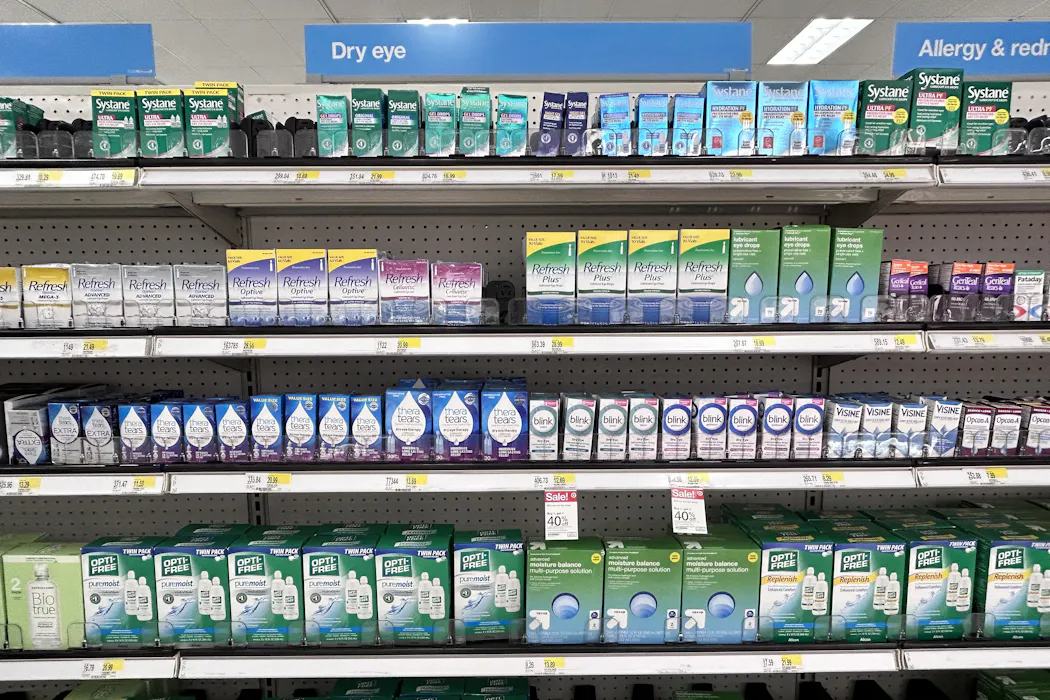
A California company has recalled more than 3.1 million bottles of lubricating eye drops because it had not properly tested – and thus could not prove – whether the products were sterile.
These products are sold under several names at major retailers across the country. The company, K.C. Pharmaceuticals, initiated the recall on March 3, 2026[1].
I am a clinical pharmacologist and pharmacist[2] who has assessed risks of poor-quality manufacturing practices and lax oversight for prescription drugs[3], eye drops[4], dietary supplements[5] and nutritional products[6] in the United States for many years. This recall is very large, potentially affecting over a million people. Using nonsterile eye drops that harbor bacteria and fungus can cause eye infections, which can become severe[7] because the immune system has a hard time accessing the eyeball and fighting the microbes.
This is not the first time that a major recall has occurred in the eye drop market – and it is the second time since 2023 that the Food and Drug Administration has become aware of sterility issues[8] at K.C. Pharmaceuticals.
Multiple products affected
Eight products are being recalled[9]: Dry Eye Relief Eye Drops, Artificial Tears Sterile Lubricant Eye Drops, Sterile Eye Drops Original Formula, Sterile Eye Drops Redness Lubricant, Eye Drops Advanced Relief, Ultra Lubricating Eye Drops, Sterile Eye Drops AC and Sterile Eye Drops Soothing Tears.
These products are sold under different company names, including Top Care, Best Choice, Good Sense, Rugby, Leader, Good Neighbor Pharmacy, Quality Choice, Valu Merchandisers, Geri Care, Walgreens, CVS and Kroger.
Their expiration dates range from April 30, 2026, to Oct. 31, 2026. They were sold at stores including Walgreens, CVS, Rite Aid, Kroger, Harris Teeter, Dollar General, Circle K and Publix.
If you purchased an eye drop product since April 2025, check to see whether the name matches any of these. If it does, go to the FDA site[10], where you can see the exact lot numbers and expiration dates for those products.
As of early April, no infections from the recalled eye drops have been reported.How to tell whether your eye drops were recalled
You can determine whether your eye drop product is part of the recall by looking at two columns in the table. Column 2 of the table lists the names of the products, with one name per row. Column 5 provides the specific lot numbers of the affected products and their expiration dates. For example, recalled Sterile Eye Drops AC products – row 1, column 2 – have the lot number AC24E01 with an expiration date of May 31, 2026, listed in row 1, column 5.
If the product you purchased has the same name but a different lot number or expiration date than the ones listed on the FDA website, it is not subject to this recall and you can safely keep using it. If you find your product has been recalled, stop using it and bring it back to the store for a refund.
The FDA has not received reports of any infections as of early April. However, if after using one of these recalled products you experience redness in your eyes, eyelids stuck together, unusual eye discharge such as goo or pus, vision changes, eyelid swelling or eye pain itchiness or irritation, these symptoms could be due to an eye infection.
If you experience these symptoms, seek medical attention – and also, if possible, report your symptoms to the FDA[11].
A history of eye drop sterility issues
The FDA has many important public health roles[12]: approving new drugs and medical devices; overseeing the manufacturing quality of prescription and over-the-counter drugs, dietary supplement and food products; and protecting the public from counterfeit medications[13].
With its limited personnel, the agency focuses its time on areas where the risks are greater. This means manufacturers of more dangerous products, or product types that were previously found to have issues, are inspected more frequently.
The FDA had inspected over-the-counter eye drop manufacturers only a few times before 2023, when cases of rare eye infections[14] due to a drug-resistant Pseudomonas bacteria strain started occurring.
In total, 81 people from 18 states developed severe eye infections[15] during the 2023 outbreak. Fourteen people experienced vision loss because of the product, an additional four people had their eyeballs removed[16] and four people died.
The agency identified two products as the culprits[17]: Global Pharma’s EzriCare Artificial Tears and Delsem Pharma’s Artificial Tears and Eye Ointment.
Later in 2023, the FDA issued recalls for Dr. Berne’s, LightEyez Limited, Pharmedica LLC[18] and Kilitch Healthcare[19] eye drop products for sterility issues. Kilitch Healthcare[20] had serious quality lapses, in which the facility was filthy, employees were barefoot on the manufacturing floor and the company fraudulently passed products that failed sterility tests.
Repeated manufacturing problem
At the time, the FDA also inspected K.C. Pharmaceuticals and issued the company a warning letter[21]. The FDA was concerned that the manufacturer failed to establish and follow appropriate written procedures designed to prevent microbiological contamination.
Although the agency did not request a recall, it did ask that the company immediately change its protocols and consult outside experts to prevent these issues from recurring.
The current massive recall of K.C. Pharmaceuticals’ eye drop products suggests lingering quality control issues in the manufacturer’s Pomona, California, plant that need to be urgently addressed. If the company had heeded the FDA’s recommendations, it would have detected the nonsterility issue before so many batches of the products were manufactured.
References
- ^ initiated the recall on March 3, 2026 (www.accessdata.fda.gov)
- ^ clinical pharmacologist and pharmacist (pharmacy.uconn.edu)
- ^ prescription drugs (doi.org)
- ^ eye drops (doi.org)
- ^ dietary supplements (doi.org)
- ^ nutritional products (theconversation.com)
- ^ can become severe (doi.org)
- ^ sterility issues (www.fda.gov)
- ^ Eight products are being recalled (www.accessdata.fda.gov)
- ^ FDA site (www.accessdata.fda.gov)
- ^ report your symptoms to the FDA (www.fda.gov)
- ^ important public health roles (www.fda.gov)
- ^ counterfeit medications (www.japha.org)
- ^ rare eye infections (www.fda.gov)
- ^ developed severe eye infections (theconversation.com)
- ^ had their eyeballs removed (www.fda.gov)
- ^ identified two products as the culprits (www.fda.gov)
- ^ Dr. Berne’s, LightEyez Limited, Pharmedica LLC (doi.org)
- ^ Kilitch Healthcare (www.fda.gov)
- ^ Kilitch Healthcare (arstechnica.com)
- ^ issued the company a warning letter (www.fda.gov)
Authors: C. Michael White, Distinguished Professor of Pharmacy Practice, University of Connecticut