

Why Michael Jackson’s daughter, Paris, won’t stop ‘til she gets enough from his estate
- Written by Reid Kress Weisbord, Distinguished Professor of Law and Judge Norma Shapiro Scholar, Rutgers University - Newark
When Michael Jackson died in 2009,his fairly straightforward 5-page will[1] left everything he owned to a family trust[2] – an estate planning technique for giving away property that allows for privacy. The trust benefits Jackson’s three children[3] and his mother[4], but nearly two decades later, Jackson’s estate, now worth an estimated US$2 billion[5], still hasn’t been fully distributed to the trust.
The most recent of many[6] legal skirmishes[7] to come to the public’s attention involves Paris Jackson, Michael Jackson’s daughter. She is asking a court to take a closer look at how the pop icon’s estate is being handled by its executors[8] – the people responsible for managing it.
Paris Jackson has accused[9] executors John Branca and John McClain of paying themselves and the estate’s lawyers too much, and for leaving $464 million[10] owned by the estate uninvested. If that’s true, it would mean there is less money than there should be left over for her and her father’s other heirs. Branca is an entertainment lawyer[11], and McClain is a music executive[12].
Both were selected by Michael Jackson and named as executors in his will. They have repeatedly disputed Paris Jackson’s allegations[13] and asserted that Paris has received at least $65 million[14] in payouts from the estate.
Paris Jackson also has accused[15] Branca of misusing his position as producer of “Michael[16],” an upcoming Michael Jackson biopic reportedly financed by Jackson’s estate, to cast an A-list celebrity – Miles Teller – to play the role of Branca himself[17] in the film. According to Paris, the casting choice was costly and unlikely to increase box office revenue[18].
Paris Jackson has also stated that the $150 million film is a “botched production[19].” The executors have responded[20] by arguing that the application of their expertise to other productions about the singer has already provided a huge payoff to the estate. The executors also recently won a court battle against Paris Jackson that ended with a judge ordering her to pay their attorney’s fees[21] in a related dispute.
As law professors[22] who study the transfer of property after death[23], we find that when disputes over inherited wealth become national news, they are often difficult to understand because this type of legal process is obscure and most people never interact directly with the probate court system.
This case illustrates what happens to property after death, even if the dispute is unusual due to the unique assets involved.
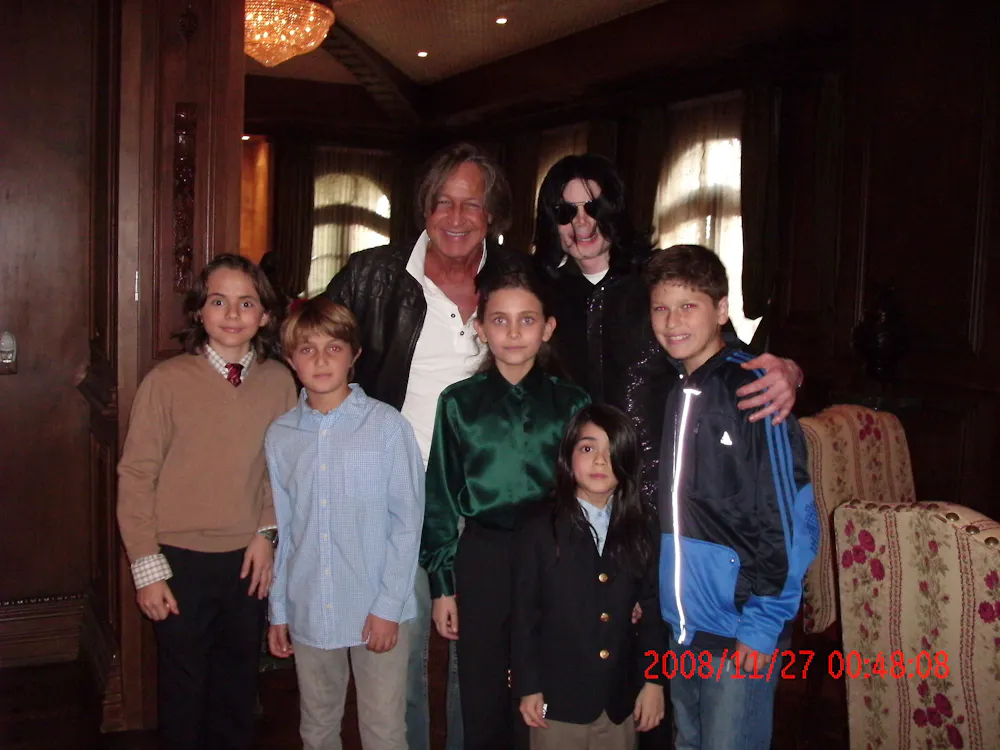
What happens to property after death
When someone dies, whether or not they’re a celebrity, any property they owned usually goes through a legal process called probate[25].
Probate is a court process that’s designed to notify everyone who may have an interest in the estate and to make sure that all property the dead person owned is handled properly. The court oversees the collection of assets, the payment of debts and taxes, and the distribution of any remaining assets to heirs.
This process can be completed in roughly one year for typical estates that do not contain unusual assets or erupt into litigation. But when the estate is large, complicated or disputed, probate can last for years or decades.
One of us, Reid Weisbord, co-authored a study of probate cases in San Francisco[26] and found that the average estate remains open for a year and a half, and hotly contested and complex cases tended to linger in the system for two years or longer.
In one of the most extreme examples, resolving probate disputes over the estate of actress and model Marilyn Monroe took more than 40 years[27] after her 1962 death.
Who manages the estate
When people draft their wills, they typically name one or more executors.
Most people who do that choose a child, grandchild, spouse or sibling to serve in that role[28]. On occasion, people choose a lawyer or other professional to serve as executor. That’s what happened in Jackson’s case.
Being an executor for the man who revolutionized pop music after a successful run as a child star is even more complex than it would be for most huge estates because it includes music rights, business interests and licensing agreements that continue to earn money.
Like other executors in this situation, the men handling Jackson’s estate have hired lawyers, accountants and other professionals to assist them. The cost of paying for those professional services comes out of the estate[29]. In this case, Paris Jackson is complaining that the compensation paid to executors of her father’s estate has been excessive. According to her legal complaint, they were paid more than $148 million[30] through the end of 2021, a number that “dwarfs any amount distributed to Paris or her siblings.”
Common causes of probate disputes
To be sure, the Jackson case is an extreme example of probate battles[31]. But about 1 in 9 estates[32] are legally disputed for a wide range of reasons that include:
Challenges to the validity of a will, often based on claims like undue influence or diminished mental capacity.
Fights over who should serve as executor.
Disputes about how much executors and lawyers should be paid.
Disagreements about how to interpret unclear language in a will.
A role with fiduciary duty
Executors have many important responsibilities. They must find and protect the dead person’s property, pay their estate’s debts, file tax returns, manage investments and eventually distribute property to the estate’s heirs.
The law says executors must act in the best interests of the estate and its beneficiaries. This is called a fiduciary duty[33], meaning they must act carefully and honestly.
In real life, it’s hard for executors to be completely neutral.
If the estate hires executors who do not stand to inherit anything from it, they usually expect to be paid for their work. Managing an estate, especially a large one, can take years and require specialized skills.
If the executor is also a beneficiary, meaning they are named in the will or an associated trust, the situation can be even more complicated because they have a personal financial stake in the outcome. Even if they act in good faith, heirs and other people named in the will may question their decisions.
This kind of conflict of interest is often unavoidable, but it is one reason why disputes over fees and decision-making are so common.

What makes this fight different
Disputes over executor pay are not unusual. But this case stands out because of the type of spending being challenged.
Jackson’s estate is not just collecting his assets and then distributing them. It is actively managing a complex portfolio of intellectual property rights that includes movies, music deals, publicity rights and other business ventures.
That raises a question that can be hard to answer: Are some expenditures from the estate benefiting those managing the estate rather than those who inherit from it?
Paying top lawyers or investing in a film could increase the estate’s value. But Jackson’s relatives may see those same decisions as unnecessary or excessive.
Paris Jackson’s latest legal challenge reflects[35] this tension. Executors get broad power to run an estate, especially one that operates like a business. But they must still justify their decisions to the people who will inherit the estate’s assets once it has settled. That’s why the choice of executor is so important.
As this dispute moves forward, the court will continue to supervise the process, which is helpful when the parties cannot agree on how to settle an estate. In the end, the case highlights a basic truth about probate: Even after death, managing wealth can be complicated, slow and deeply contested.
References
- ^ his fairly straightforward 5-page will (cdn.theconversation.com)
- ^ a family trust (smartasset.com)
- ^ benefits Jackson’s three children (www.the-independent.com)
- ^ his mother (people.com)
- ^ now worth an estimated US$2 billion (parade.com)
- ^ of many (people.com)
- ^ legal skirmishes (www.bbc.com)
- ^ handled by its executors (www.nycbar.org)
- ^ Paris Jackson has accused (pagesix.com)
- ^ leaving $464 million (people.com)
- ^ Branca is an entertainment lawyer (johnbranca.com)
- ^ McClain is a music executive (www.discogs.com)
- ^ repeatedly disputed Paris Jackson’s allegations (www.yahoo.com)
- ^ at least $65 million (www.the-independent.com)
- ^ has accused (www.tmz.com)
- ^ misusing his position as producer of “Michael (www.yahoo.com)
- ^ the role of Branca himself (www.imdb.com)
- ^ costly and unlikely to increase box office revenue (www.yahoo.com)
- ^ botched production (www.dailymail.co.uk)
- ^ executors have responded (www.yahoo.com)
- ^ ordering her to pay their attorney’s fees (www.yahoo.com)
- ^ law professors (www.law.rutgers.edu)
- ^ after death (www.law.virginia.edu)
- ^ Mohamed Hadid via Getty Images (www.gettyimages.com)
- ^ legal process called probate (www.americanbar.org)
- ^ study of probate cases in San Francisco (illinoislawreview.org)
- ^ Marilyn Monroe took more than 40 years (dallaselderlawyer.com)
- ^ serve in that role (lawreview.law.ucdavis.edu)
- ^ comes out of the estate (mca.legmt.gov)
- ^ more than $148 million (people.com)
- ^ extreme example of probate battles (theconversation.com)
- ^ 1 in 9 estates (illinoislawreview.org)
- ^ fiduciary duty (www.law.cornell.edu)
- ^ Dia Dipasupil/Getty Images (www.gettyimages.com)
- ^ latest legal challenge reflects (www.the-independent.com)
Authors: Reid Kress Weisbord, Distinguished Professor of Law and Judge Norma Shapiro Scholar, Rutgers University - Newark