
Specialist Disability Accommodation Explained: What It Is and Who It Is For
- Written by Metropolitan Digital

For people living with significant disability, finding housing that genuinely meets their needs rather than simply existing within it can be life-changing. Standard housing, even with modifications, often falls short for those with extreme functional impairment or very high support needs. That is precisely the gap that Specialist Disability Accommodation was designed to fill.
Specialist Disability Accommodation, commonly referred to as SDA, is one of the most significant and most misunderstood components of the National Disability Insurance Scheme. It is not available to everyone, and it is not simply about physical access. It is a funding pathway specifically designed to enable people with the highest support needs to live in purpose-built homes that reduce barriers, increase safety, and allow greater independence than would otherwise be possible.
This guide explains what SDA is, who qualifies, the different housing design categories, and how to navigate the pathway toward accessing it in Australia.
What Is Specialist Disability Accommodation?
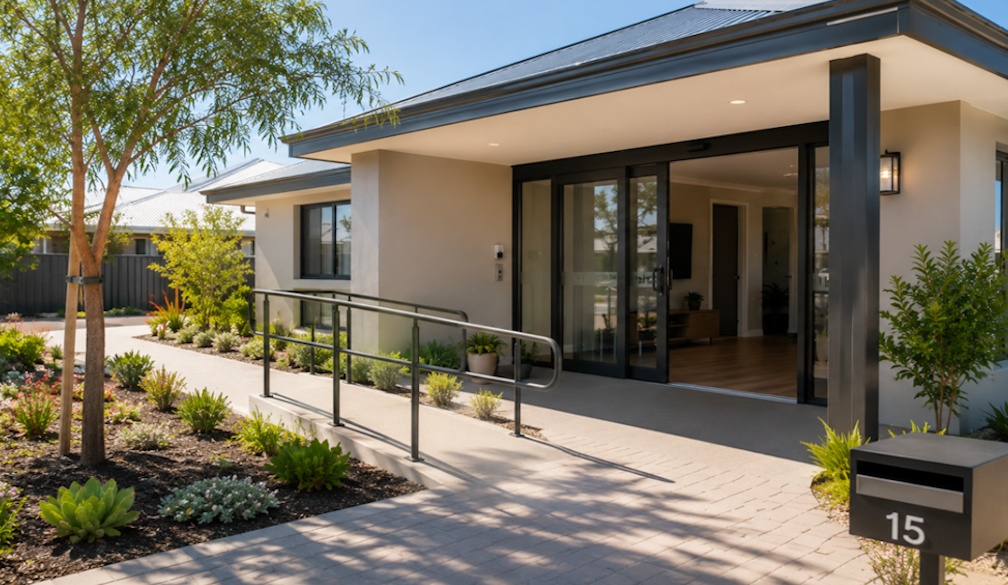
Specialist disability accommodation refers to purpose-built or significantly modified housing designed for NDIS participants with extreme functional impairment or very high support needs. The NDIS funds the cost of the accommodation itself, not the support delivered within it, through what is called SDA funding.
It is a common point of confusion: SDA covers the dwelling; Supported Independent Living (SIL) covers the support workers. A participant can receive both, depending on their NDIS plan, but they are assessed and funded separately.
SDA properties must be registered with the NDIS and meet strict design standards set out by the NDIS Quality and Safeguards Commission. Providers who build and manage SDA housing must demonstrate that their properties meet the relevant design category and are suitable for the intended participants.
Who Is Eligible for SDA Funding?
SDA funding is not available to all NDIS participants it is specifically targeted at those with the most significant needs. The NDIS estimates that only around 6% of participants are likely to require SDA housing.
To be considered for SDA, a participant must:
- Have an extreme functional impairment in one or more of the following areas: self-care, self-management, mobility, or communication
- Have very high support needs that cannot be reasonably met through standard housing, even with modifications
- Be able to demonstrate that SDA is a reasonable and necessary support in the context of their overall goals and circumstances
The assessment process involves evidence from allied health professionals, typically occupational therapists, who document how the participant's disability affects their ability to live in standard housing and why purpose-built accommodation would lead to better outcomes.
It is also worth noting that younger people with disability are increasingly being prioritised for SDA, as the scheme aims to help people avoid or exit arrangements that are not appropriate for their age, such as living in aged care facilities.
The Four SDA Design Categories
SDA housing is classified into four design categories, each targeting a different level of need:
Improved Liveability
Designed for people who have sensory, intellectual, or cognitive disability. These properties include better natural lighting, clear and simplified layouts, and reduced ambient noise features that are not always visible but make daily life considerably easier for occupants.
Fully Accessible
Designed for people with significant physical disability who use a wheelchair or have limited mobility. These properties include wider doorways and corridors, accessible bathrooms, lowered benchtops, and step-free access throughout.
Robust
Designed for people who require a very high level of physical support or whose behaviour may pose a risk to themselves or others. SDA housing in this category uses reinforced construction materials and fittings, secure fencing, and designs that minimise potential hazards while still feeling like a real home rather than an institution.
High Physical Support
This is the most intensive SDA design category, designed for participants with very high physical support needs, often including those who use complex communication devices, require ceiling hoists, or need on-site overnight assistance. Properties include structural provisions for ceiling hoists, emergency power backup, a second bathroom for support workers, and automatic doors.
SDA Housing in Practice: What to Expect
Finding appropriate SDA housing requires patience and planning. Supply has grown considerably since the NDIS was established, but demand still outpaces availability in many regions, particularly for newer, purpose-built Robust and High Physical Support properties.
The process typically involves:
- Get SDA included in your NDIS plan: This requires submitting evidence, usually from an occupational therapist, that demonstrates your eligibility. If SDA is not currently in your plan, you may need to request a plan review to have it added.
- Understand your SDA funding amount: The NDIS sets SDA funding amounts based on the design category approved in your plan, the dwelling type (apartment, house, or villa), and the location. Understanding your funding envelope helps narrow down which properties are financially viable.
- Search for available properties: The NDIS Housing Hub is the main platform for searching registered SDA properties. Registered providers can also be contacted directly to discuss what they have available or what is in the pipeline.
- Conduct thorough property assessments: Before committing to a property, visit it in person, ideally with an occupational therapist who can assess whether the design genuinely matches your needs. Check the quality of construction, the surrounding neighbourhood, proximity to services, and the track record of the registered provider.
- Negotiate a housing agreement: Once a suitable property is identified, a housing agreement is put in place between the participant and the SDA provider. This should clearly outline costs, responsibilities, notice periods, and what happens if circumstances change.
Combining SDA with Other NDIS Supports
SDA does not exist in isolation. Most participants who live in SDA housing also receive other forms of NDIS support, most commonly Supported Independent Living funding for on-site support workers.
The interplay between SDA and SIL is important. Some SDA providers also manage the support arrangements within their properties; others prefer to work alongside separately chosen SIL providers. Understanding this distinction matters because it affects how much control a participant has over who supports them in their home.
Beyond SIL, SDA participants may also access:
- Assistive Technology (AT): Funded equipment to support independence within the home
- Home Modifications: For cases where a standard property is being adapted rather than SDA being used
- Support Coordination: To help manage the complexity of multiple supports working together
Conclusion
Specialist disability accommodation represents a genuine investment in the lives of people with the most significant support needs. When it is the right fit, a well-designed SDA property can transform daily life, reducing the physical barriers that drain energy and dignity, enabling greater independence, and providing a stable, appropriate home base from which to pursue meaningful goals.
Accessing SDA takes time, evidence, and persistence, but for those who qualify, it can be one of the most impactful supports within an NDIS plan. Understanding the design categories, knowing your funding entitlements, and working with experienced providers and allied health professionals are the keys to finding the right solution.