

Gerrymandering is unpopular with Florida voters – my recent survey shows why DeSantis pushed it through anyway
- Written by Daniel A. Smith, Professor of Political Science, University of Florida
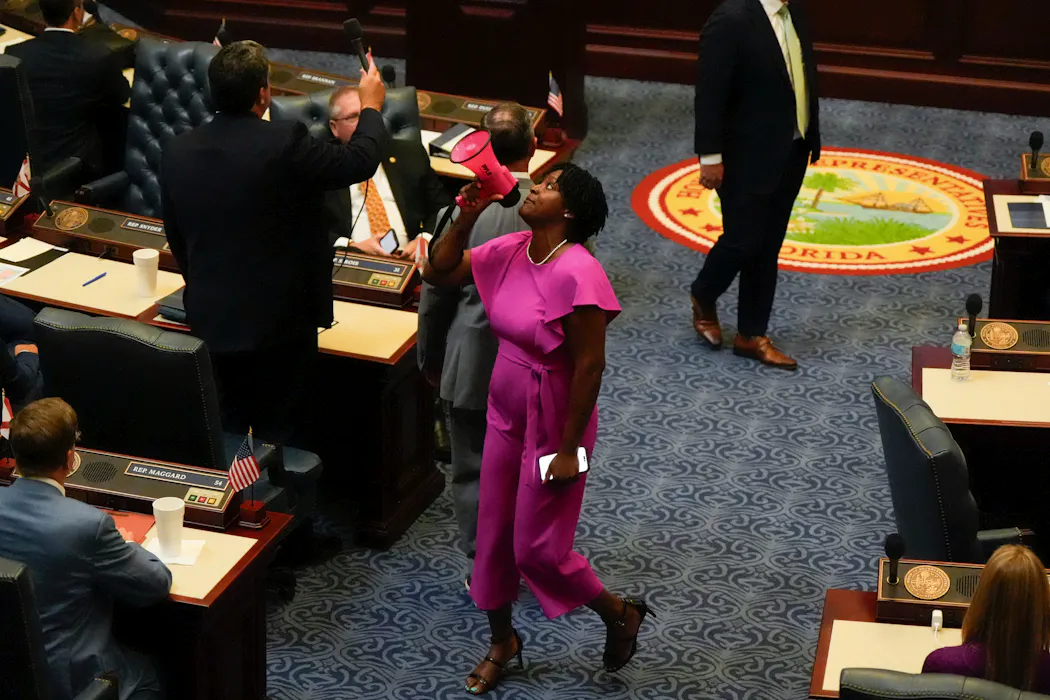
The Sunshine State has joined Texas[1], California[2] and a handful of other states[3] in the battle of mid-decade redistricting[4].
On April 29, 2026, in a near party-line vote, the Florida Legislature adopted new congressional maps drawn by a staffer of Gov. Ron DeSantis[5]. The GOP-led effort could lead to four more of Florida’s 28 seats in the U.S. House of Representatives turning Republican. Florida redrew its maps[6] with the same underlying population data just four years ago.
Mid-decade redistricting in Florida was all but inevitable once Donald Trump made partisan map-drawing a national priority[7]. Florida’s Republican legislators had little incentive – or political cover – to resist.
I’m a political scientist, and my research focuses on voting and elections[8]. I’ve served as an expert in redistricting cases in Florida, and I’ve been tracking Florida voters’ opinions on DeSantis’ 2026 redistricting efforts.
What Florida voters think about gerrymandering overall
University of Florida Ph.D. student Rolland Grady[9] and I conducted a representative survey of more than 2,300 Florida registered voters[10] drawn randomly from the publicly available Florida voter file[11].
Participants had one week, from April 6-13, 2026, to fill out our web-based survey linked to an email invitation. We did not offer any incentives to respondents providing us with their opinions.
The results show broad, principled opposition to partisan gerrymandering in Florida. Roughly two-thirds of Florida voters we contacted said they oppose redrawing district lines to advantage a political party.
What they think about their own party gerrymandering
But beyond gauging how Florida voters feel about gerrymandering in theory, we wanted to see how they responded to actual scenarios of mid-decade redistricting, and whether it mattered to them which party was leading the redistricting.
So we designed an experimental survey: Before respondents were asked how they felt about mid-decade redistricting, each participant was randomly shown one of five different statements.
The control version of this statement read, “The redrawing of congressional district boundaries typically occurs every 10 years, immediately following the U.S. Census.”
The other versions gave that control statement, and then added information about a particular state – California, Texas or Florida – that was redrawing its maps, and which party was endorsing that gerrymandering.
Finally, there was a version of the statement that included the control statement, told voters that Republican Ron DeSantis was endorsing the redistricting in Florida, and then added a third line of text: “As you might know, in 2010 citizens in Florida passed the Fair Districts Amendment with bipartisan support of more than 60% of the vote.”
According to our survey results, Florida Democrats are intensely opposed to gerrymandering for partisan purposes when it is framed as benefiting Republicans. This strong opposition may increase the focus of big donors on Florida, helping to drive fundraising for Democratic candidates. It may also mobilize some Democrats to come out to the polls in November. But when it comes to persuasion, most Democrats who plan to vote in the midterm elections are already highly engaged and unlikely to support GOP candidates anyway.
Florida Republicans also oppose mid-decade redistricting in the abstract. Not surprisingly, support for drawing lines to help the GOP increases when framed as something DeSantis is pursuing, but only by 15 percentage points.
This suggests some latent, principled discomfort among GOP voters. On the other hand, strong messaging from Republican leaders, particularly Trump, in the run-up to the election may override concerns about fairness. Partisanship[12] and leader-motivated behavior[13] will drive many Republican voters to rationalize the GOP’s effort to increase their congressional margins by four seats.
Where independent voters fall
Finally, our poll finds that Florida independent voters have strong and consistently principled opposition to partisan gerrymandering; their support rarely exceeds 15% under any condition. But in Florida, independent voters, who are often registered with no party affiliation, are less politically organized or active than registered Republicans and Democrats. And it’s likely that these voters redrawn into a new congressional district will be even less knowledgeable about who represents them[14] when it’s time to pick candidates.
It is possible that Democrats will be able to use GOP gerrymandering in November to get independent voters to the polls and oppose Republican candidates. But opposition to gaming the system is just one of many factors that will shape how independents vote. Other issues, such as concerns over the rising cost of living, immigration, foreign policy and presidential approval, usually play a much greater role[15] in determining candidate choice in midterm elections.
The Florida GOP’s mid-decade redistricting gambit reveals a troubling truth about American democracy: Voters oppose partisan gerrymandering in principle but tolerate it in practice when their side benefits.
So even though a majority of Florida voters disapprove of the GOP’s effort to tilt the state’s map even further toward electing Republicans, I’m not expecting widespread punishment of Republican incumbents due to these redistricting efforts.
DeSantis is betting that Trump’s influence will paper over GOP voters’ discomfort, that Democrats will stay demoralized, and that independents will stay home in November.
How GOP gerrymandering could backfire
But just because the GOP’s gerrymandering won’t sway voters away from their party doesn’t mean it won’t end up hurting them at the polls.
DeSantis’ map crams Democrats into just four of 28 districts – a high-stakes gamble that requires lightning to strike twice. To succeed for the GOP, the map requires both 2024’s Democratic and independent voter apathy[16] and 2022’s swing to the right by independents[17].
But midterms tend to bring lower turnout, and today’s economic squeeze plus Trump’s dismal approval ratings[18] make another 2022-style GOP surge[19] highly unlikely.
The worst case for the GOP would be a 2018-style blue wave[20]. It would destroy DeSantis’ gerrymander and could potentially flip three South Florida GOP seats and two in Central Florida to Democrats. Aggressive redistricting may meet unintended consequences[21] come November.
See you in court
Florida Democrats and other groups will likely sue[22] under the state constitution’s Fair Districts amendments[23], which were adopted in 2010 by Florida voters of all political stripes. These amendments to the Florida Constitution[24] expressly prohibit redrawing districts with the intent to favor or disfavor a political party or an incumbent.
But DeSantis and his lawyers are setting the stage[25] to defend the mid-decade partisan gerrymander[26]. They fully expect that the Florida Supreme Court will strike down the Fair Districts amendments’ ban[27] on partisan redistricting. The odds are stacked against the citizens of Florida who support fair districts.
In my view, the real losers here are the Florida voters, particularly those who approved the state’s Fair Districts amendments in 2010[28], which were a bipartisan triumph.
References
- ^ Texas (www.hks.harvard.edu)
- ^ California (www.npr.org)
- ^ a handful of other states (www.pbs.org)
- ^ mid-decade redistricting (www.tampabay.com)
- ^ new congressional maps drawn by a staffer of Gov. Ron DeSantis (www.npr.org)
- ^ Florida redrew its maps (www.cnn.com)
- ^ made partisan map-drawing a national priority (www.reuters.com)
- ^ voting and elections (scholar.google.com)
- ^ Rolland Grady (www.linkedin.com)
- ^ representative survey of more than 2,300 Florida registered voters (electionsmith.substack.com)
- ^ publicly available Florida voter file (dos.fl.gov)
- ^ Partisanship (www.vox.com)
- ^ leader-motivated behavior (academic.oup.com)
- ^ less knowledgeable about who represents them (doi.org)
- ^ usually play a much greater role (yougov.com)
- ^ 2024’s Democratic and independent voter apathy (www.politico.com)
- ^ 2022’s swing to the right by independents (lci.fsu.edu)
- ^ Trump’s dismal approval ratings (www.forbes.com)
- ^ 2022-style GOP surge (ballotpedia.org)
- ^ 2018-style blue wave (www.nytimes.com)
- ^ may meet unintended consequences (www.politico.com)
- ^ will likely sue (floridapolitics.com)
- ^ Fair Districts amendments (www.commoncause.org)
- ^ Florida Constitution (www.leg.state.fl.us)
- ^ DeSantis and his lawyers are setting the stage (floridaphoenix.com)
- ^ defend the mid-decade partisan gerrymander (www.wlrn.org)
- ^ will strike down the Fair Districts amendments’ ban (www.wlrn.org)
- ^ approved the state’s Fair Districts amendments in 2010 (www.commoncause.org)
Authors: Daniel A. Smith, Professor of Political Science, University of Florida