

Basic income’s appeal today is similar to its roots in 18th-century England – it’s a way to compensate people for a common good taken for private gain
- Written by Will Glovinsky, Research Assistant Professor of Humanities, Binghamton University, State University of New York
A story has been going around about artificial intelligence for the past decade: At some point, AI advances[1], robots and self-driving cars[2] will throw countless people out of work.
The rich folks who control AI companies will get richer. Most other people’s fortunes will decline as their skills lose value and they fail to get new jobs. To prevent the U.S. from suffering mass hunger and political chaos, the story goes, it will need a new system: The government will provide many people, or maybe everyone, with no-strings-attached cash payments.
There are many names for this kind of policy, including “basic income[3].”
Backing from a diverse group
This is essentially the story told by 2020 presidential candidate Andrew Yang[4] and by the labor leader Andy Stern[5]. You may also hear it from an array of tech billionaires[6], including OpenAI CEO Sam Altman[7] and Tesla and SpaceX CEO Elon Musk. In telling it, those moguls also get to hype their companies’ AI[8] models.
Local governments from Stockton, California, to Atlanta are testing basic income programs by giving low-income residents[9] cash. Across the Atlantic, British Investment Minister Jason Stockwood has said he and other leaders are “definitely talking[10]” about the idea.
Meanwhile, social scientists are also interested. They point to basic income experiments that have found more tangible benefits, such as fewer hospitalizations[11] and improved parenting practices[12].

Telling the ‘basic income’ origin story
I think this talk about basic income – as a solution to automation-driven job losses, or simply as a way to help people – misses something important.
As a scholar of British culture, literature and politics[14], I study the English thinkers and activists who first called for a form of basic income at the turn of the 19th century – an era of political turmoil, technological change and the global exchange of ideas. I believe that understanding the origins of basic income[15] policies can help clarify what’s behind the current surge of interest in the idea.
This history suggests that basic income is not just about finding a solution to automation or efficiently reducing poverty, though it might do those things.
More fundamentally, calls for basic income respond to the sense that something has been unfairly taken from ordinary people.
AI’s ‘expertise theft’
The feared mass layoffs from AI have not yet materialized[16], though cracks may be forming[17] in the job market for entry-level workers.
But technology is developing rapidly, making it hard to predict the future.
Meanwhile, another side of AI’s impact on workers is coming into focus.
Three MIT economists, including two Nobel laureates, published a paper in February 2026 in which they bluntly warned that current AI models are engaged in what they called “expertise theft[18].”
“AI systems,” they wrote, “freely scrape content from websites, social media, YouTube, newspapers, Wikipedia, and blogs, then statistically recombine this material and sell access to the results.”
The concern is that companies will sell[19] all of us – or our former bosses – AI-mediated access to the very ideas, artwork and knowledge[20] contributed by generations of skilled humans.
This large-scale appropriation of the resources that knowledge workers use to make a living – skills, styles, theorems, jokes, recipes – has a historical parallel. As the Oxford economist and machine learning expert Maximilian Kasy argues[21], AI companies’ wholesale data theft echoes the enclosure of common lands in England in the lead-up to the Industrial Revolution[22].
The loss of the commons
From 1604 to 1914, English landowners leveraged their control over Parliament to seize 6.8 million acres (275,186 square kilometers) of land[23] once shared by commoners. In the mid-18th century, the process began to accelerate.
Previously, common people had shared the right to plow open fields, gather firewood, graze animals and cut peat from nearby bogs. Rules and fines[24] had discouraged overuse.
Now, with these resources fenced off, commoners had to till someone else’s land for a wage. A communal inheritance was literally hedged in[25].
As with AI companies’ expertise theft today, the enclosure of the commons was defended by large landowners as a modernizing step. Experts debate[26] the issue, but the economists Leander Heldring, James A. Robinson and Sebastian Vollmer found that English enclosures contributed to a 45% increase[27] in farm yields.
But the enclosures of lands that previously belonged to all also reduced the economic independence of ordinary people. One observer summed up the feelings of commoners[28] this way: “All I know is, I had a cow, and an act of Parliament has taken it from me.”
Amid this widespread dispossession, the first basic income proposals arose.
A response to losses due to enclosures
In the early 1770s, the magistrates of Newcastle attempted to enclose the town’s common land and keep its rental income for themselves.
The local townspeople successfully resisted. If they gave up their rights to use the land, they would divide its rent equally.
The struggle inspired a young Newcastle schoolmaster named Thomas Spence[29] to develop the world’s first basic income proposal[30].
The son of an impoverished netmaker, Spence never left England. But he was intrigued by reports of Indigenous American systems[31] of egalitarian land use.
His reading persuaded him that the English enclosures were designed to fence most people out from the very resources they needed to survive, rendering them dependent. “If Grass or Nettles they could eat,” he joked, landowners would fence them off, too.
Thomas Spence still has fans today.Spence therefore called for the real estate of each parish, the ancient administrative unit in England, to be collectively owned by its residents[32]. Farms would be leased out to the highest bidder, preserving competition.
But rather than accrue to landlords, the rents would fund parish-run schools, hospitals, courts and roads. The remainder would be distributed equally every three months to all residents of the parish, regardless of their age, occupation or gender. In one version[33] of the plan, the local women would run the parish.
In 1798, Spence estimated the dividend at almost 10 pounds annually[34]. In 1816, his followers proposed a version that would compensate former landholders but still yield a payout of 4 pounds[35].
Those 4 pounds in 1816 would be worth about 342 pounds, or US$456, as of February 2026. And 10 pounds in 1798 would equal 1,126 pounds, or $1,496.
Both were huge sums at a time when male farm laborers might make about 28 pounds annually if employed year-round[36]. The economist Thomas Malthus, Spence’s contemporary, doubted[37] the dividend would be so high.
Whatever the payment’s value, Spence argued that this money was owed to the people. If enclosing land they previously could farm forced commoners to work for landlords or move to northern factory towns[38], the payments would compensate them for the loss of their “natural rights” to the earth.
The first basic income movement
By the 1790s, Spence had landed in London.
There, hawking radical pamphlets and a sassafras-flavored beverage called saloop[39] out of stalls and storefronts, he spread the gospel of basic income as the French Revolution raged.
A tireless propagandist, he published dialogues, handbills, ballads, anthologies and – when Spence was inevitably arrested – his own trial proceedings. He was imprisoned several times between 1792 and 1802, usually without any trial at all.
When he died in 1814[40], he had a loyal following of Spenceans, who chalked slogans on walls and sang ballads[41] in the London taverns promoting his plan for unconditional cash dividends.
The doctrine of universal payments was considered so dangerous that the Spenceans were outlawed[42] in 1817.
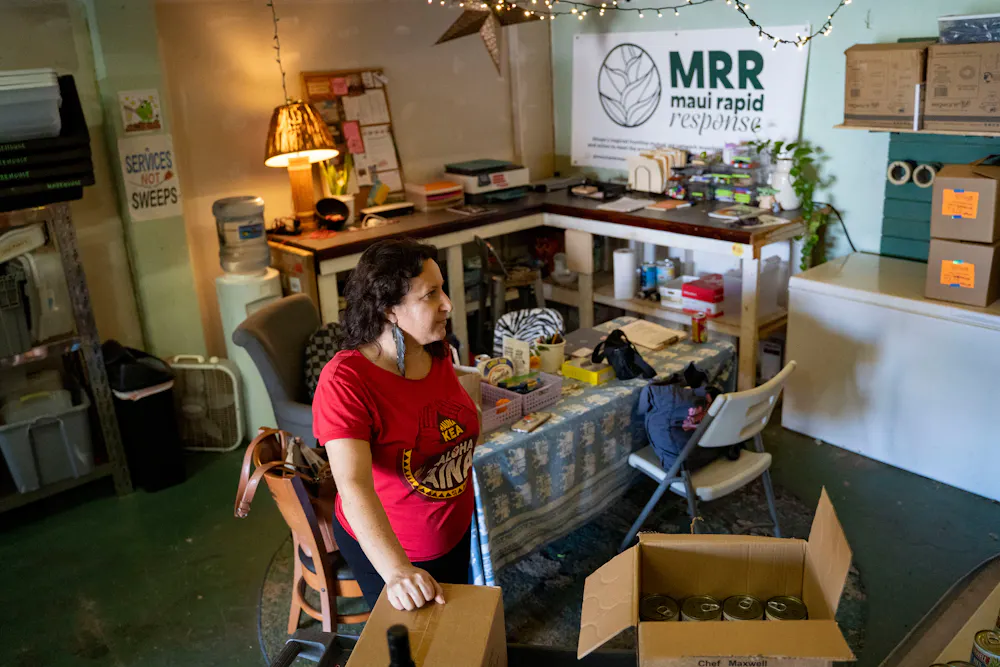
Basic income aims to address dispossession
Up until recently, Spence’s ideas had found their closest analog in Alaska[44], which since 1982 has paid several thousand dollars yearly to every resident out of the revenue generated from the drilling of oil on state-owned lands.
In my view, Spence’s writings are evidence that the concept of basic income is a response to pervasive dispossession. Two centuries ago, Spence and his followers fought for universal cash payments because enclosure had made ordinary people too dependent on landowners for their livelihoods.
They did not emphasize that money would be good for people, as proponents do now. They argued that money was owed to people.
Today, concerns about AI-driven automation are driving the discussion about basic income. But automation may also be how the 21st-century form of semilegal theft becomes visible. Mounting calls[45] for an “AI dividend[46],” provided on a regular basis, or “universal basic capital[47],” received as a lump sum, or even public ownership of AI[48] may all reflect a dawning awareness of a new wave of dispossession.
This time, it’s fueled by the appropriation of humanity’s next common resource: our knowledge and skills.
References
- ^ AI advances (theconversation.com)
- ^ robots and self-driving cars (www.hachettebookgroup.com)
- ^ basic income (basicincome.stanford.edu)
- ^ Andrew Yang (2020.yang2020.com)
- ^ Andy Stern (www.porchlightbooks.com)
- ^ tech billionaires (www.businessinsider.com)
- ^ Sam Altman (www.ycombinator.com)
- ^ hype their companies’ AI (doi.org)
- ^ basic income programs by giving low-income residents (guaranteedincome.us)
- ^ definitely talking (www.theguardian.com)
- ^ fewer hospitalizations (doi.org)
- ^ improved parenting practices (doi.org)
- ^ Nick Otto/AFP via Getty Images (www.gettyimages.com)
- ^ scholar of British culture, literature and politics (scholar.google.com)
- ^ origins of basic income (dx.doi.org)
- ^ have not yet materialized (www.cnn.com)
- ^ cracks may be forming (digitaleconomy.stanford.edu)
- ^ expertise theft (www.brookings.edu)
- ^ companies will sell (www.wired.com)
- ^ ideas, artwork and knowledge (www.theatlantic.com)
- ^ Maximilian Kasy argues (stonecenter.gc.cuny.edu)
- ^ the Industrial Revolution (www.bbc.co.uk)
- ^ 6.8 million acres (275,186 square kilometers) of land (www.parliament.uk)
- ^ Rules and fines (doi.org)
- ^ literally hedged in (www.epoch-magazine.com)
- ^ Experts debate (doi.org)
- ^ English enclosures contributed to a 45% increase (bpb-us-w2.wpmucdn.com)
- ^ summed up the feelings of commoners (archive.org)
- ^ Thomas Spence (www.routledge.com)
- ^ first basic income proposal (doi.org)
- ^ reports of Indigenous American systems (dx.doi.org)
- ^ collectively owned by its residents (quod.lib.umich.edu)
- ^ one version (quod.lib.umich.edu)
- ^ 10 pounds annually (books.google.com)
- ^ payout of 4 pounds (books.google.com)
- ^ about 28 pounds annually if employed year-round (upload.wikimedia.org)
- ^ economist Thomas Malthus, Spence’s contemporary, doubted (archive.org)
- ^ move to northern factory towns (bpb-us-w2.wpmucdn.com)
- ^ sassafras-flavored beverage called saloop (footprintsoflondon.com)
- ^ died in 1814 (doi.org)
- ^ chalked slogans on walls and sang ballads (quod.lib.umich.edu)
- ^ outlawed (books.google.com)
- ^ AP Photo/Mengshin Lin (newsroom.ap.org)
- ^ closest analog in Alaska (scholarworks.alaska.edu)
- ^ Mounting calls (www.politico.com)
- ^ AI dividend (www.nytimes.com)
- ^ universal basic capital (www.digitalistpapers.com)
- ^ public ownership of AI (openfuture.eu)
Authors: Will Glovinsky, Research Assistant Professor of Humanities, Binghamton University, State University of New York