

Kurdish gains in Syria could disappear without international support − just as they did in Iraq decades ago
- Written by Lily Hindy, PhD Candidate in History, University of California, Los Angeles
Days into the United States and Israel’s war against Iran, Trump officials and Kurdish leaders began openly musing[1] about whether Iran’s Kurdish minority should seize on the dire situation facing the Islamic Republic and engage in armed operations against the state.
The question of how best to pursue nationalist goals is a long-simmering one for the region’s Kurds[2], who have no state of their own and live within countries – primarily Iran, Iraq, Turkey and Syria – that have regularly denied them political equality[3].
As Kurds in Iran consider how best to push for their goals, their brethren in Syria are taking stock of recent political and military settlements.
The agreements reached[4] between Kurdish leadership and the central government in Syria in January have been lauded by some[5] as historic gains guaranteeing unprecedented rights and lamented by others as a clear defeat for the greater goal of maintaining autonomy in a decentralized Syria. Whatever the case, the process continues and the future of Kurdish rights in Syria is uncertain.
As a historian of the Kurdish nationalist movement in Iraq and the diaspora[6], I see parallels between the Syria case and a similar process that took place in the early 1970s between Iraq’s ruling Baath party and Kurdish leadership there. Their agreement of 1970 unraveled over the course of a few years before falling apart completely[7]. It was followed by the Baath government’s genocidal turn against Kurds[8] in the 1980s, which included forced displacement, massacres, torture in detainment and chemical weapons attacks.
The familiar pattern, whereby central governments negotiate with Kurdish leadership when the government is weak and then take back all of their promises when strong, may or may not unfold in Syria. But the history of Iraq should serve as a cautionary tale and underscores that the critical ingredient in a fair and equitable process for Kurds will be that international players stay invested in the process.
Before Syria, Saddam’s Iraq
Like Ahmed al-Sharaa[9], who took power in Syria shortly after the December 2024 fall of Bashar Assad, Saddam Hussein in 1970 was the young leader of a new Arab government[10] that was eager to consolidate power and generate internal and external legitimacy.
The Kurds in Iraq, led at the time by Mulla Mustafa Barzani and the Kurdistan Democratic Party, had fought against the central government on and off throughout the 1960s[11]. Saddam and his Iraqi Baath party made ending the government’s costly and burdensome struggle with the Kurds in the north a priority upon taking the helm[12].
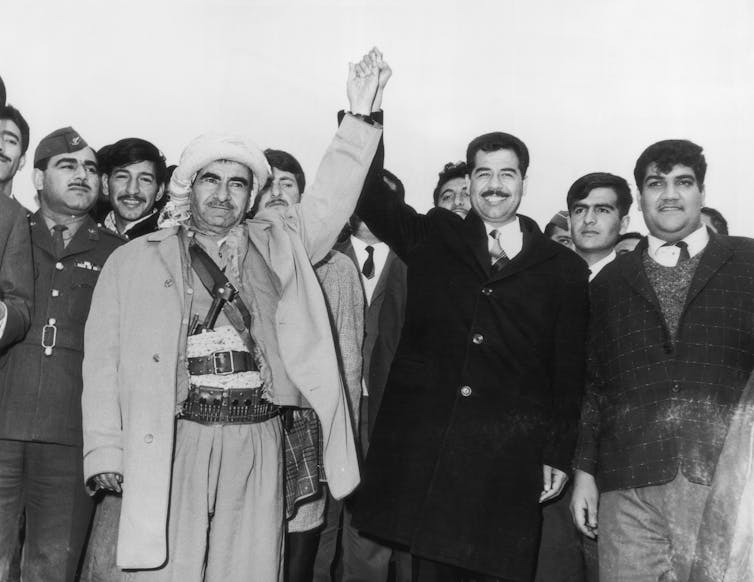
Within months of taking power in July 1968, the new Baath government made the Kurdish new year Nowruz an official holiday and recognized Kurdish nationality[14]. Negotiations between the Kurdish leadership and the government culminated with a three-day visit by Saddam to the northern Kurdish region. Upon his return to Baghdad, the government published the 1970 “March 11 Manifesto[15],” and both sides promised to take steps[16] to implement the articles immediately. The government swore in new Kurdish ministers, committed to establishing a Kurdish-language printing press and made Kurdish an official language alongside Arabic in the Kurdish regions.
The provisions of the March Manifesto were wide-ranging, and the government was careful about their packaging. It was a unilateral first step, with the idea that a new constitution and a regional autonomy law would follow.
But the two sides were soon at loggerheads[17]. The major disagreements were over which areas would be included in a Kurdish autonomous region of Iraq and the relationship between the administrative and legislative powers of the region vis-à-vis the state.
The Baath Party was also displeased[18] by the open secret that Iran – as well as Israel and the United States – was covertly supporting the Kurds in its fight against the Iraqi central government. In 1974, the Baath regime declared autonomy for the Kurdish areas but only in name, continuing to appoint its people to political positions there. The Kurds continued to rebel.
When in 1975 Iran and Iraq signed an agreement that included a commitment by Iran to stop funding the Iraqi Kurds, the U.S. followed suit[19]. Henry Kissinger, then secretary of state and national security adviser for the Ford administration, famously told a congressional investigation[20]: “Covert action should not be confused with missionary work.”
Relations between the Baath and Kurdish leadership continued to be rocky, and the Baath Party under Saddam’s leadership would carry out what human rights groups have described as a genocide[21] between 1987 and 1988 against its Kurdish population during the Iran-Iraq war. Another genocide was averted in 1991 only when the international community intervened following the first Gulf War[22], and a more authentic Kurdish autonomous region emerged.
The Syrian case today
Similar to the Baath Party’s March Manifesto of 1970, Syria’s al-Sharaa enshrined the major gains won by Syrian Kurds in a unilateral presidential decree[23] on Jan. 16, 2026.
Human rights lawyers have celebrated[24] the document as a historic step in the right direction. But along with the promises on civil and educational rights made in ceasefire agreements[25] on Jan. 16 and Jan. 30, it has yet to be formally preserved in a constitution[26].
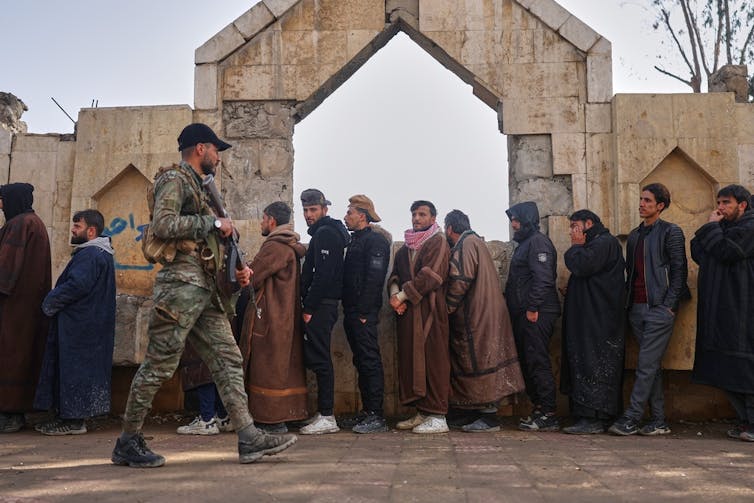
Kurdish demands in Syria today and Iraq in the 1970s were similar, as were the first rights granted[28] – linguistic and cultural. Meanwhile, more profound changes, such as acknowledging ethnic identity, indigenous status or territorial control, have been sticking points between Kurds and the central government.
Similar to the Kurdistan Democratic Party in Iraq in 1970, the Syrian Democratic Forces – the country’s most powerful coalition of Kurdish groups – has put forward[29] a proposed amendment to al-Sharaa’s constitutional declaration that would change the official state name, the Syrian Arab Republic, and another to explicitly reference the Kurds’ indigenous connection to the land.
Causes for hope … and concern
Yet two major differences may prevent Syria from following the same downward spiral as the 1970s negotiations in Iraq: the presence of international players in negotiations and the transnational activism of a large Kurdish diaspora.
In 1970, external sponsors refused to be openly involved in the Kurdish situation in Iraq, calling it an internal issue. Iran, Israel and the U.S.[30] were covertly providing arms and funds to the Kurds, but the negotiations on rights and autonomy that took place between the Kurds and the central Iraqi government were in the form of bilateral discussions[31]. In contrast, international players have been involved in the negotiations[32] throughout the process in Syria.
During negotiations with the al-Sharaa government, Kurdish Commander Mazloum Abdi was constantly accompanied by a U.S. Central Command commander. Al-Sharaa, meanwhile, relies heavily on Turkish support, while France, Germany, Saudi Arabia, Israel and the United Arab Emirates have been pushing his Syrian government to be more inclusive, especially after clashes in the spring left thousands of minority Alawites dead and Israel intervened to protect the minority Druze[33] population of southern Syria.
Another key, differentiating factor today is that, unlike in 1970, there is a sizable Kurdish diaspora. It was not until 1975 that the politically active Kurdish diaspora really began to take shape, and today it numbers somewhere around 1 to 2 million[34], with large populations living in Germany, France, Sweden, the U.K., Austria, the Netherlands and the U.S.
When Syrian government forces began to move into Kurdish-controlled areas in January, the diaspora, along with the Kurds in other parts of the Kurdish regions of the Middle East[35], organized rallies, circulated petitions and lobbied governments to bring an end to the fighting. All of this kept the issue in the international press[36], moved public opinion and put pressure on the al-Sharaa government to further bolster the new administration’s legitimacy.
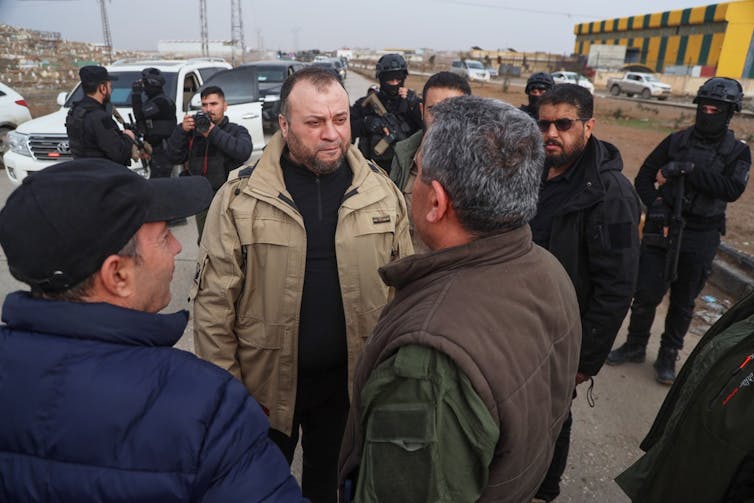
While Kurds in Syria today may breathe a sigh of relief that no widespread, state-directed violence occurred after the rise of the al-Shaara government, they will still feel that they have lost a lot of leverage in the new political environment.
The Syrian Democratic Forces lost 80%[38] of its territory, along with most natural resources, and the Rojava experiment[39] of localized Kurdish administration, a form of democratic confederalism that emphasized gender equality in leadership positions and ecological justice, has largely been extinguished.
Still, al-Sharaa’s promises to the Kurds portend a brighter future[40] than Syria has ever seen for Kurdish rights. For many Syrian Kurds, the key to sustaining that hope is international support and pressure for a future constitution. In that way, they argue, al-Sharaa can be accountable for sticking to his promises to the Kurds rather than losing any of the international legitimacy his government has thus far attained.
It would be a stark difference from what happened to the Kurds in Saddam’s Iraq.
References
- ^ Kurdish leaders began openly musing (www.bbc.com)
- ^ the region’s Kurds (sciences.ucf.edu)
- ^ regularly denied them political equality (www.cambridge.org)
- ^ agreements reached (www.bbc.com)
- ^ lauded by some (snhr.org)
- ^ a historian of the Kurdish nationalist movement in Iraq and the diaspora (history.ucla.edu)
- ^ falling apart completely (www.pbs.org)
- ^ genocidal turn against Kurds (www.jstor.org)
- ^ Ahmed al-Sharaa (www.nytimes.com)
- ^ new Arab government (search.worldcat.org)
- ^ on and off throughout the 1960s (www.merip.org)
- ^ a priority upon taking the helm (timesmachine.nytimes.com)
- ^ Central Press/Getty Images (www.gettyimages.com)
- ^ an official holiday and recognized Kurdish nationality (search.worldcat.org)
- ^ March 11 Manifesto (newsabah.com)
- ^ both sides promised to take steps (timesmachine.nytimes.com)
- ^ two sides were soon at loggerheads (search.worldcat.org)
- ^ was also displeased (search.worldcat.org)
- ^ the U.S. followed suit (www.aljazeera.com)
- ^ told a congressional investigation (blogs.lse.ac.uk)
- ^ carry out what human rights groups have described as a genocide (www.hrw.org)
- ^ averted in 1991 only when the international community intervened following the first Gulf War (www.kurdistan24.net)
- ^ presidential decree (sana.sy)
- ^ have celebrated (snhr.org)
- ^ ceasefire agreements (english.enabbaladi.net)
- ^ formally preserved in a constitution (snhr.org)
- ^ AP Photo/Ghaith Alsayed (newsroom.ap.org)
- ^ first rights granted (sana.sy)
- ^ has put forward (en.majalla.com)
- ^ Iran, Israel and the U.S. (link.springer.com)
- ^ bilateral discussions (search.worldcat.org)
- ^ have been involved in the negotiations (en.majalla.com)
- ^ intervened to protect the minority Druze (warontherocks.com)
- ^ somewhere around 1 to 2 million (www.cambridge.org)
- ^ the Kurdish regions of the Middle East (www.bbc.com)
- ^ kept the issue in the international press (www.nytimes.com)
- ^ AP Photo/Baderkhan Ahmad (newsroom.ap.org)
- ^ Syrian Democratic Forces lost 80% (jacobin.com)
- ^ Rojava experiment (www.lrb.co.uk)
- ^ portend a brighter future (www.aljazeera.com)
Authors: Lily Hindy, PhD Candidate in History, University of California, Los Angeles