

Facing myriad global pressures, Iran intensifies outreach to African partners for critical needs
- Written by Eric Lob, Associate Professor of Politics and International Relations, Florida International University
Burkina Faso’s security minister headed to Tehran on Nov. 12, 2025, for high-level talks with Iranian officials[1]. The visit was a fruitful one: The West African nation reopened its Iranian embassy, finalized new agreements on security cooperation[2] and held discussions[3] about strengthening relations in agriculture and industry.
Far from being a routine bilateral diplomatic event for both countries, the trip was part of a broader trend. Since the onset of war in Gaza in late 2023, sparked by the Tehran-aligned and -funded Palestinian group Hamas, Iran has found itself increasingly isolated and facing a number of political and economic crises. Internationally, Tehran’s network of proxy nonstate groups across the Middle East, its so-called axis of resistance[4], was stretched to a breaking point with Israel’s brutal campaigns[5] against Hamas and Hezbollah[6], as well as the fall of the Assad regime in Syria[7] in late 2024.
Tehran’s regional difficulties then culminated with a punishing 12-day war with Israel in June 2025[8], which the United States joined, and the subsequent EU-imposed U.N. “snapback” sanctions[9] – a series of penalties against Iran that were initially lifted after it signed a deal in 2015 limiting Tehran’s nuclear program in return for the easing of sanctions.
On top of this, Iran is now facing an environmental crisis[10] in the shape of severe drought affecting the capital[11].
As Iranian officials attempt to weather this rocky new reality, they have looked to advance geostrategic interests elsewhere. As an expert on Iran’s foreign policy[12], I believe one key emergent area for this is Africa, where Iran has increased its outreach to historically dependable and strategically significant partners such as Burkina Faso. This outreach has created important opportunities for Tehran to engage with countries on issues such as security and critical minerals, while also expanding its market for weapons and other exports while bypassing sanctions.
Security, uranium and economy in West Africa
In addition to Burkina Faso, Iran has intensified its outreach to other African countries in West Africa and the Sahel region, such as Mali and Niger.
Since the early 2020s, these countries have experienced[13] military coups and distanced themselves from the West. They have also confronted serious security threats from rebels, militias and jihadists. Consequently, and as was the case with Ethiopia[14], they have looked toward Iran as a security partner and a potential supplier of arms, drones and other equipment.
For Iran, expanding relations with these African countries holds the benefit of opening up economically critical markets, including metals and minerals. For instance, Tehran has aspired to access[15] gold from Burkina Faso and Mali, and uranium from Niger. Depending on the extent of the damage and destruction to Iran’s nuclear program during the 12-day war, the potential uranium procured from these countries could be particularly critical if Iran decides to reconstitute or weaponize its program.
After the Iranian and Malian foreign ministers met[16] in May 2024, they did so again the following year in October to discuss[17] reinforcing bilateral and multilateral relations.
To this end, both nations agreed to hold a joint economic commission and to show solidarity and support at meetings of international organizations such as the U.N. and the Non-Aligned Movement[18].
Meanwhile, in April and May 2025, Iran and Niger signed economic[19] and security agreements[20] after earlier inking a deal[21] by which Tehran would acquire 300 tons of uranium[22] for US$56 million.
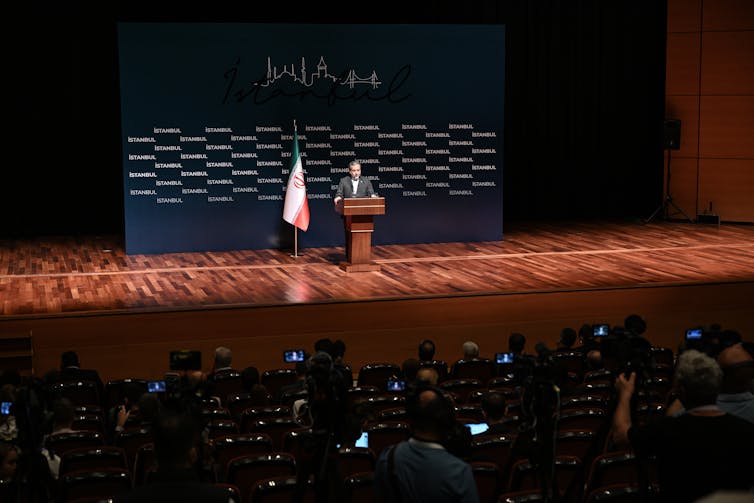
From February to October, Iran also looked to deepen diplomatic relations with Sierra Leone by holding bilateral meetings[24] with the West African nation. Apart from attempting to access uranium, Tehran sought Sierra Leone’s support in multilateral institutions[25] such as the U.N. and the Organization of Islamic Cooperation.
That said, Sierra Leone, while serving as a nonpermanent member[26] of the U.N. Security Council, voted against lifting sanctions[27] on Iran in September, due in part to the African nation’s dependence on British aid.
Outreach opportunities in Africa
In addition to its engagement with countries in West Africa, Iran has also looked elsewhere on the continent for areas of strategic significance.
Between October and November 2025, Tehran coordinated with Malawi[28] on circumventing sanctions and importing aircraft[29].
In August, Iran sought to strengthen security ties with South Africa – its largest trading partner[30] on the continent by far. At the time, the South African army chief, Gen. Rudzani Maphwanya, made statements supporting Iran[31] and criticizing Israel that created controversy. Between April and October, Iran held meetings and signed agreements with Zimbabwe in the areas of economy[32], the environment[33] and medical tourism[34].
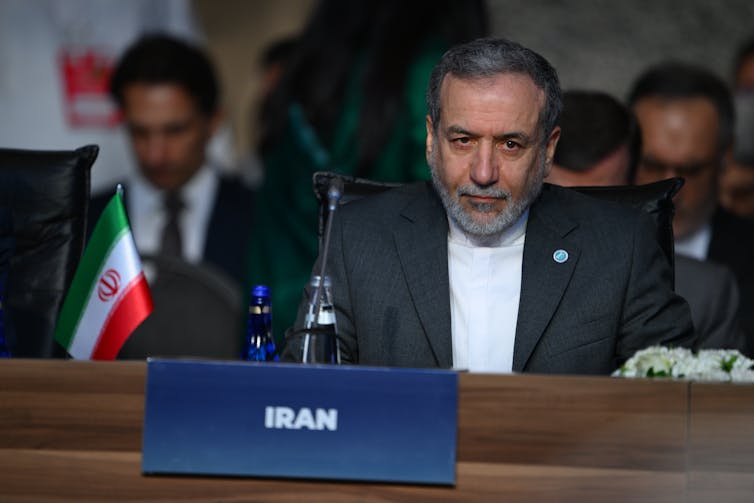
While attending the Non-Aligned Movement’s meeting of foreign ministers in Kampala in October, Iranian Foreign Minister Abbas Araghchi met with Ugandan President[35] Yoweri Museveni and thanked him for Uganda’s condemnation of the U.S. and Israel during the 12-day war, during which Uganda evacuated 41 students[36] from Iran. Araghchi also expressed Tehran’s interest and intent on strengthening cooperation with Kampala in agriculture, the economy and commerce.
For Iran, Uganda is strategically important because it possesses not only uranium but also cobalt, which is used to manufacture lithium batteries, superalloys and other industrial products.
How Iran is still constrained
While Iran has increased its outreach to reliable and significant African partners across the continent, it has encountered a number of consequential constraints.
For one, there continues to be extensive trade competition from Iran’s Middle East rivals. As recently as 2023, the United Arab Emirates was a top export partner[38] for Burkina Faso, Mali, Niger, Uganda and Zimbabwe, as well as a top import partner of Malawi, Niger, Sierra Leone, Uganda and Zimbabwe. As it had done with several countries in the Horn of Africa in 2016, the UAE, alongside Saudi Arabia, could pressure others on the continent to reduce or eliminate their engagement with Tehran.
Particularly with the U.N. snapback sanctions now back in place, the ongoing reality of global economic pressure on Iran could also give African countries pause when considering stronger bilateral ties with Tehran. Yet before then, and even with the U.S. reimposing sanctions on Tehran after withdrawing from the Iran nuclear deal in 2018[39], these countries did not simply stop engaging with Tehran.
The final constraint is the transactional nature of Iran’s outreach. This could create distrust among its African partners. In November 2025, for instance, Tehran reportedly supplied drones to Eritrea[40] as tensions escalated between it and Ethiopia. Such a move by Iran could complicate its relationship with Ethiopia and put Tehran in the middle of another conflict between those countries.
Time will tell whether the opportunities outweigh the constraints as Iran attempts to forge closer relations with the continent. Yet for government officials in Tehran weathering sundry crises at home and abroad, it will feel like they have few alternatives than to seek opportunities where they can find them.
References
- ^ high-level talks with Iranian officials (en.abna24.com)
- ^ new agreements on security cooperation (www.tehrantimes.com)
- ^ held discussions (www.tehrantimes.com)
- ^ axis of resistance (theconversation.com)
- ^ Israel’s brutal campaigns (theconversation.com)
- ^ and Hezbollah (theconversation.com)
- ^ fall of the Assad regime in Syria (www.reuters.com)
- ^ punishing 12-day war with Israel in June 2025 (www.aljazeera.com)
- ^ subsequent EU-imposed U.N. “snapback” sanctions (www.consilium.europa.eu)
- ^ environmental crisis (carnegieendowment.org)
- ^ severe drought affecting the capital (theconversation.com)
- ^ an expert on Iran’s foreign policy (pir.fiu.edu)
- ^ these countries have experienced (www.stimson.org)
- ^ Ethiopia (theconversation.com)
- ^ has aspired to access (www.atlanticcouncil.org)
- ^ foreign ministers met (en.mfa.ir)
- ^ in October to discuss (en.mehrnews.com)
- ^ Non-Aligned Movement (nam.go.ug)
- ^ signed economic (en.irna.ir)
- ^ security agreements (westafricaweekly.com)
- ^ inking a deal (rasanah-iiis.org)
- ^ acquire 300 tons of uranium (www.iranintl.com)
- ^ Elif Ozturk / Anadolu via Getty Images (www.gettyimages.com)
- ^ holding bilateral meetings (freetown.mfa.ir)
- ^ sought Sierra Leone’s support in multilateral institutions (sierraleone.mfa.gov.ir)
- ^ serving as a nonpermanent member (ayvnews.com)
- ^ voted against lifting sanctions (en.mehrnews.com)
- ^ coordinated with Malawi (www.ch-aviation.com)
- ^ importing aircraft (www.meforum.org)
- ^ largest trading partner (doi.org)
- ^ made statements supporting Iran (www.bbc.com)
- ^ areas of economy (president.ir)
- ^ the environment (www.tehrantimes.com)
- ^ medical tourism (www.heraldonline.co.zw)
- ^ met with Ugandan President (en.mfa.ir)
- ^ evacuated 41 students (opm.go.ug)
- ^ Arif Hudaverdi Yaman/Anadolu via Getty Images (www.gettyimages.com)
- ^ was a top export partner (oec.world)
- ^ withdrawing from the Iran nuclear deal in 2018 (edition.cnn.com)
- ^ supplied drones to Eritrea (hornreview.org)
Authors: Eric Lob, Associate Professor of Politics and International Relations, Florida International University