

Foreign companies exiting Russia echo the pressure campaign against South Africa's racist apartheid system
- Written by Stephen Bagwell, Assistant Professor of Political Science, University of Missouri-St. Louis
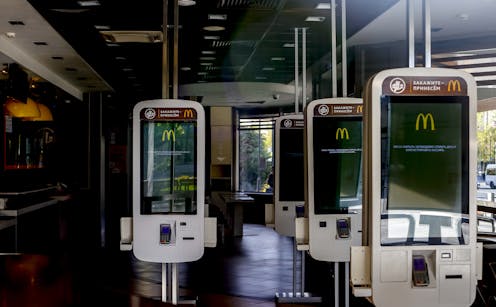 McDonald's is leaving Russia after three decades of operating there.Sefa Karacan/Anadolu Agency via Getty Images
McDonald’s provided many Russians with their first taste of capitalism three decades ago. Now, the global fast-food giant is exiting the country. Starbucks is also on its way out.
All told, about 1,000 companies have decided to...